Fidelity Bloom℠
A behavioral-science-driven mobile fintech app that helped users build healthier saving and spending habits through separated Spend and Save accounts, a debit-card-linked rewards engine, automated round-ups, and short challenges.
Overview
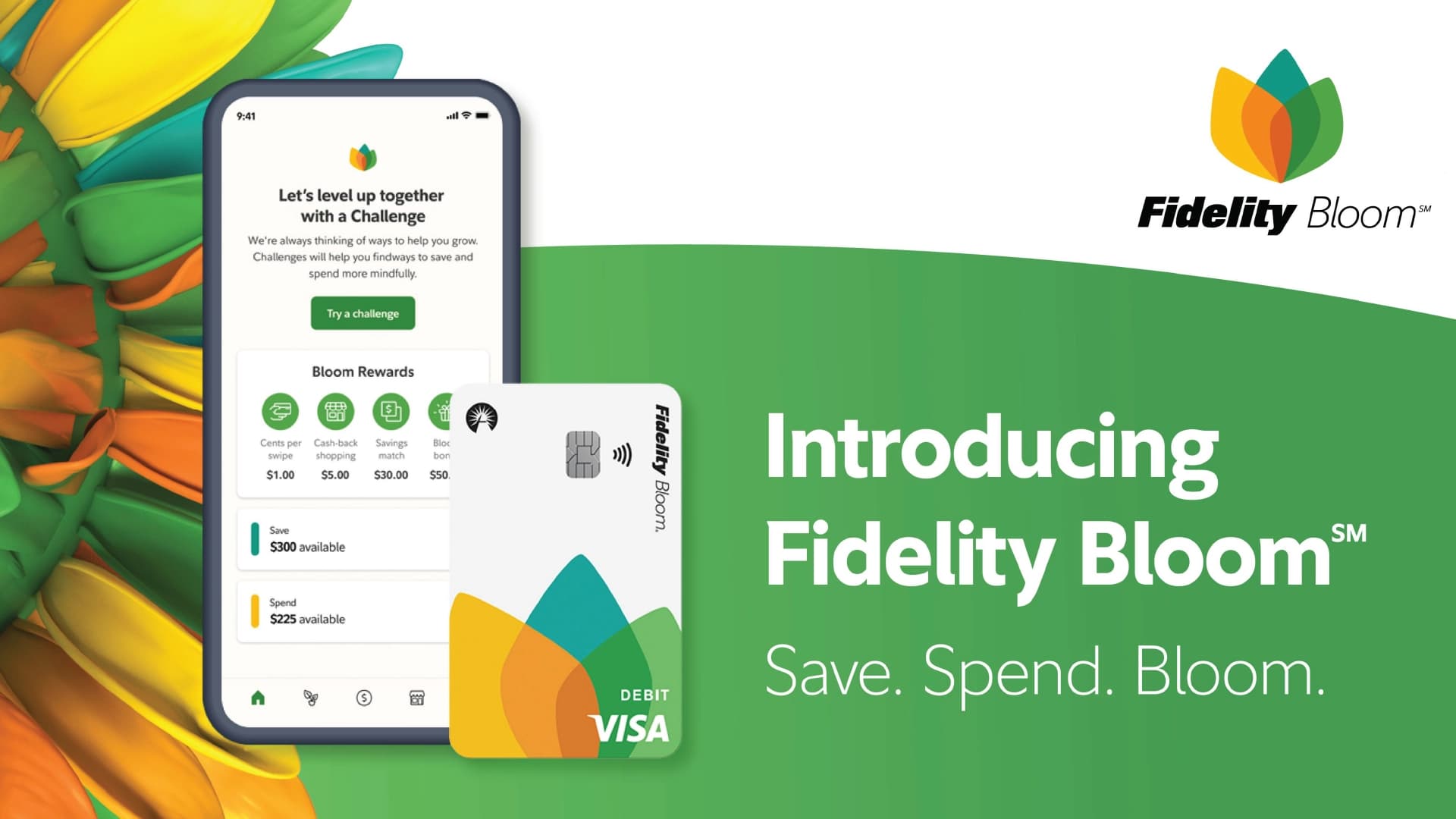
Fidelity Bloom℠ was a free consumer financial app from Fidelity Investments designed to help users save more, spend less, and feel better about their money. The product combined behavioral science with a debit-card-linked rewards engine, separated Spend and Save brokerage accounts, automated round-ups, savings matches, cash-back shopping, and short challenges intended to make small saving behaviors feel achievable and repeatable.
Bloom was later discontinued as a standalone app, with its roughly 100,000 users redirected to Fidelity’s flagship mobile experience as part of a broader cash-management consolidation. This page is preserved as a historical case study — the engineering value lies in what the work required: a modern Kotlin Android codebase, brokerage-grade financial workflows, and consumer-facing UX inside a regulated enterprise environment.
Why behavioral finance
Saving money is often less a knowledge problem than a behavior problem. Fidelity’s 2022 Money Mindset Study found that many younger adults wanted to save more but found finances stressful enough that they avoided thinking about money altogether — a gap between intention and action that traditional banking tools rarely close.
Bloom approached that gap by making saving smaller, more automatic, and more rewarding. The product translated behavioral mechanics — separation of accounts, positive reinforcement, automation, reflection prompts — into mobile experiences that ran on top of real brokerage accounts.
- 65%of adults 18–44 felt they should save moreFidelity Money Mindset, 2022
- 5–10%annual savings match on the first $300 savedFidelity, 2022
- 10¢deposited to Save per Bloom debit purchaseFidelity, 2022
- Up to 25%cash back through participating retailersFidelity, 2022
What sets it apart
Spend and Save, by design
The product separated everyday spending from savings into two brokerage accounts, then wired automation between them — round-ups, debit-card rewards, and savings matches — so saving happened as a side effect of normal life rather than an act of willpower.
Kotlin, MVVM, Clean Architecture, Compose
The Android app was built on a modern Kotlin foundation: MVVM with Clean Architecture for testability and layer separation, and Jetpack Compose for the UI — chosen to support evolving behavioral-finance product surfaces inside a long-lived consumer fintech codebase.
Production-grade workflows for regulated money
Bloom’s Spend and Save were brokerage accounts, not bank accounts — which meant brokerage core-position mechanics, SIPC framing, debit-network integration, and consumer-finance compliance shaping every feature. The work sat squarely at the intersection of mobile engineering and regulated financial services.
My role
As Principal Software Engineer at Fidelity Investments, I led development and launch of Fidelity Bloom℠ on Android — a consumer fintech mobile app focused on savings, spending habits, and financial wellness. The work spanned mobile architecture, feature delivery, and cross-functional collaboration with product, design, QA, and compliance inside a major financial-services environment.
- Led development and launch of Fidelity Bloom mobile application on Android
- Architected and implemented core application features on a Kotlin / Jetpack Compose stack
- Drove a modern Android architecture using MVVM and Clean Architecture for testability and layer separation
- Ensured performance, scalability, and security of the mobile platform for a consumer fintech product
- Collaborated with product, design, and QA to define and prioritize behavioral-finance features
- Conducted code reviews, mentored engineers, and contributed to engineering-quality and delivery processes
Capabilities
- Spend & Save accounts
- Automated round-ups
- Debit-card purchase rewards
- Annual savings match
- Savings challenges
- Cash-back shopping
- Goal tracking
- Account dashboard
- Real-time transaction sync
- Brokerage-grade security
- Statements & notifications
- In-app onboarding
Distributed across
Built on
- Languages
- Kotlin
- UI
- Jetpack ComposeAndroid JetpackMaterial
- Architecture
- MVVMClean ArchitectureLayered domain/data/presentation
- Domain
- Brokerage account workflowsDebit-card rewardsRound-ups & savings matchesBehavioral-finance UX
- Platforms
- Android
Further reading
Public sources framing Fidelity Bloom’s product positioning, behavioral-finance basis, and lifecycle.
- Fidelity Study Reveals Nearly Two in Three Young Adults Feel They Should Save More — But Avoid Thinking About ItFidelity Newsroom, 2022Launch press release covering Bloom’s Spend and Save accounts, savings match, debit-card rewards, round-ups, and the Money Mindset research behind the product.
- Fidelity Discontinues Its Bloom Savings and Rewards AppThe Wealth Advisor, 2024Reports the strategic sunset of Bloom and the migration of its users to Fidelity’s flagship mobile experience.
“Save. Spend. Bloom. — A behavioral-finance app that turned small mobile interactions into measurable saving habits.”
Principal Software Engineer · Fidelity Investments
This case study covers the product. The full role detail — team context, responsibilities, and career impact — lives on the experience page.
Read the role detail